

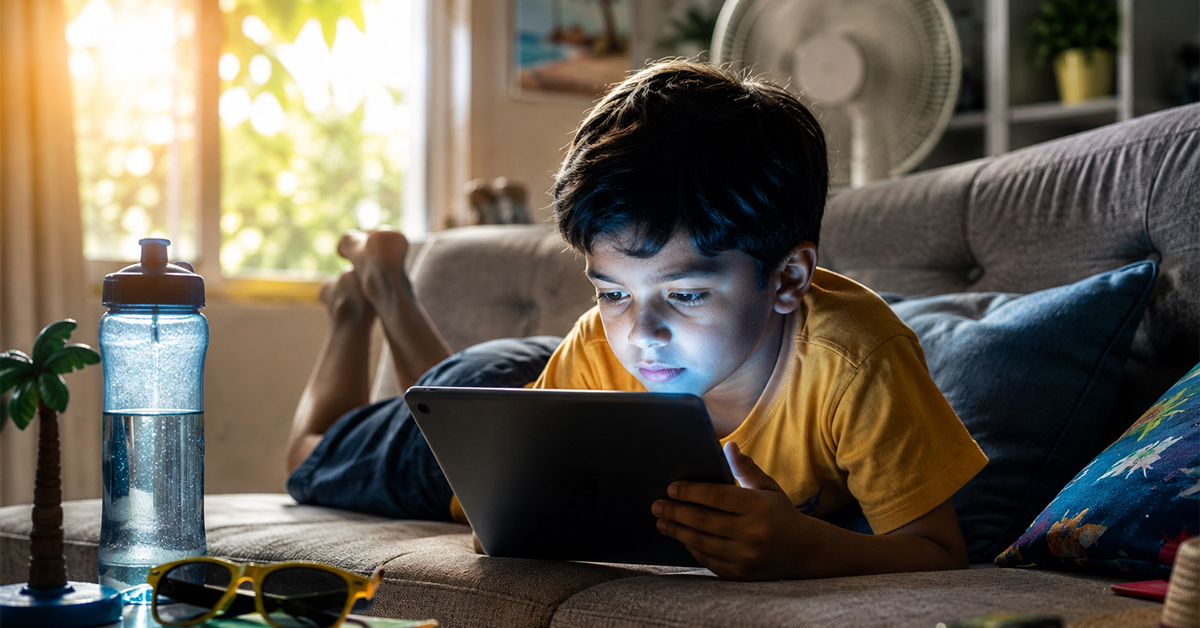
Summer used to mean scraped knees, long afternoons, and the kind of boredom that quietly turned into imagination. Now it looks a little different. Screens fill the gaps. A cartoon after lunch becomes two. A game stretches into the evening. It doesn’t always feel like a problem at first, just something that keeps things calm and easy. But somewhere in the middle of all that, a small question starts to sit in the background. What is all this doing to their eyes?
It’s not a dramatic shift. It’s more subtle. A bit of rubbing, a complaint about headaches, maybe blinking more than usual. The kind of things that are easy to overlook. That’s usually how screen time effects on children eyes show up, quiet, slow, and easy to miss. So instead of trying to fix everything at once, it helps to think of it like a checklist. Not strict rules. Just small things that make sense when you think about them long enough.
Let Their Eyes Look Far Away Again
Screens keep the eyes working in one fixed way. Always near, always focused, always a little tense. It’s not how eyes were meant to spend the whole day. There’s something almost simple about this first shift. Let them look far, really far, out of a window, down a street, at the sky. It sounds too easy, but it matters more than it seems.
When kids step away from screens and let their eyes relax into the distance, the strain loosens. It’s one of those quiet eye care tips for kids that doesn’t need explaining to work. At Win Vision, this is something we often notice during check-ups. Children who spend time outdoors, even just a little, tend to show fewer signs of strain. It’s not about removing screens completely. Just giving the eyes a different kind of view.
Blinking Shouldn’t Be Forgotten
It’s strange how something as automatic as blinking can change without anyone noticing. When children stare at screens, they blink less. Much less. And that’s where dryness begins. That slightly tired, irritated feeling that they might not even know how to describe. This is where digital eye strain children experience becomes real, even if they never say it out loud.
A small reminder here and there can help. Not in a strict way, just a gentle nudge. Look away, blink, reset. It’s not about discipline. It’s about awareness, which takes time to build. We at Win Vision often explain this in the simplest way possible during consultations. The eyes need moisture just like the body needs water. Blinking is how they stay comfortable.
The Light Around the Screen Matters More Than the Screen
Most attention goes to the device itself, brightness, distance, time. But the space around the screen often gets ignored. A dim room with a bright screen is harder on the eyes than people expect. It creates contrast that the eyes have to keep adjusting to. That adjustment, repeated over time, turns into fatigue. So the room matters. Soft lighting, nothing too harsh, nothing too dark.
This is one of those kids vision protection tips that doesn’t feel obvious until it’s pointed out. Once it is, it’s hard to ignore. In many homes we visit through our outreach work in Telangana and Andhra Pradesh, this is one of the first things we gently suggest changing. It’s simple, accessible, and makes a noticeable difference.
Screens Shouldn’t Follow Them Everywhere
There’s a quiet shift that happens when screens become constant companions. During meals, before sleep, even during small breaks. Eyes don’t get a pause. Creating small no-screen moments during the day feels less like a rule and more like a boundary. Meals without devices. Evenings that wind down without glowing screens.
This is often where parents start thinking about how to protect kids eyes from screens in a more practical way. Not by removing screens entirely, but by deciding where they don’t belong. At Win Vision, after examining thousands of young patients, this pattern shows up often. Children who have even a few screen-free pockets in their day tend to have fewer complaints related to eye fatigue. It’s not perfect. It doesn’t need to be, just intentional.
Regular Eye Checks Shouldn’t Be Delayed
There’s always a tendency to wait, to assume things will settle on their own. But children don’t always explain what they’re feeling clearly. Blurry vision might show up as disinterest. Eye strain might look like irritability. That’s why regular eye check-ups matter more than they seem. We at Win Vision have tested over 54,246 eyes and supported more than 1.5 lakh families over the past eight years. Across our six centers and through our outreach in rural and tier-2 and tier-3 areas, one thing has become clear.
Early checks change everything. Not every issue is serious. But catching the small ones early keeps them from becoming something bigger. Our approach has always been simple. Make eye care accessible. Keep it honest. Use the right technology, but never lose the human side of it. Whether it’s pediatric ophthalmology, squint care, or something as common as screen-related strain, the goal stays the same. Clear vision without confusion.
A Commitment To Clear Vision Across Communities
We at Win Vision continue to focus on making eye care simple, reachable, and trustworthy. With years of experience, skilled specialists, and a growing presence across regions, we aim to support families with care that feels consistent, thoughtful, and centered on long-term eye health for every child.
Final Thoughts
Nothing about this is about removing screens completely. That’s not realistic, and it’s not necessary. It’s more about noticing patterns, small signs, and tiny shifts in behavior. The eyes are adjusting to a world that didn’t exist before. They’re doing their best to keep up. So the response doesn’t need to be extreme, just thoughtful. A little more distance, a little more blinking, better lighting, fewer screens at certain times, and the reassurance of regular check-ups. That’s really what these eye care tips for kids come down to, not rules, but reminders.