

There is something about screens that makes them easy to blame. The moment a child starts squinting at the classroom board or moving closer to the television, the conversation almost always turns to phones, tablets, or laptops. It feels like the answer is already sitting in everyone's hand.
At Win Vision, we have seen this thought come up again and again. Parents often arrive feeling certain that screens have caused the problem. It is a reasonable assumption because children spend more time with devices than ever before. But the more we look at children's eye health, the more it feels like the story is a little bigger than that.
The Screen Is Only One Part Of The Day
When people talk about childhood myopia causes, screens usually take the spotlight. Yet the eyes do not really know whether they are looking at a mobile phone, a notebook, or a drawing book. They simply know they have been focusing on something close for a long time. A school day itself is full of near work.
Reading, writing, homework, tuition, and then a little entertainment on a screen. Before anyone notices, most of the day has been spent looking just a short distance away. At Win Vision, we often encourage families to think about the entire routine instead of one habit. Sometimes that small shift changes how the whole situation is understood.
Did You Know?
Myopia is becoming increasingly common among school-aged children worldwide. Experts believe that prolonged near work combined with reduced outdoor time contributes to its rising prevalence, making regular eye examinations more important than ever.
Something Else Has Quietly Changed
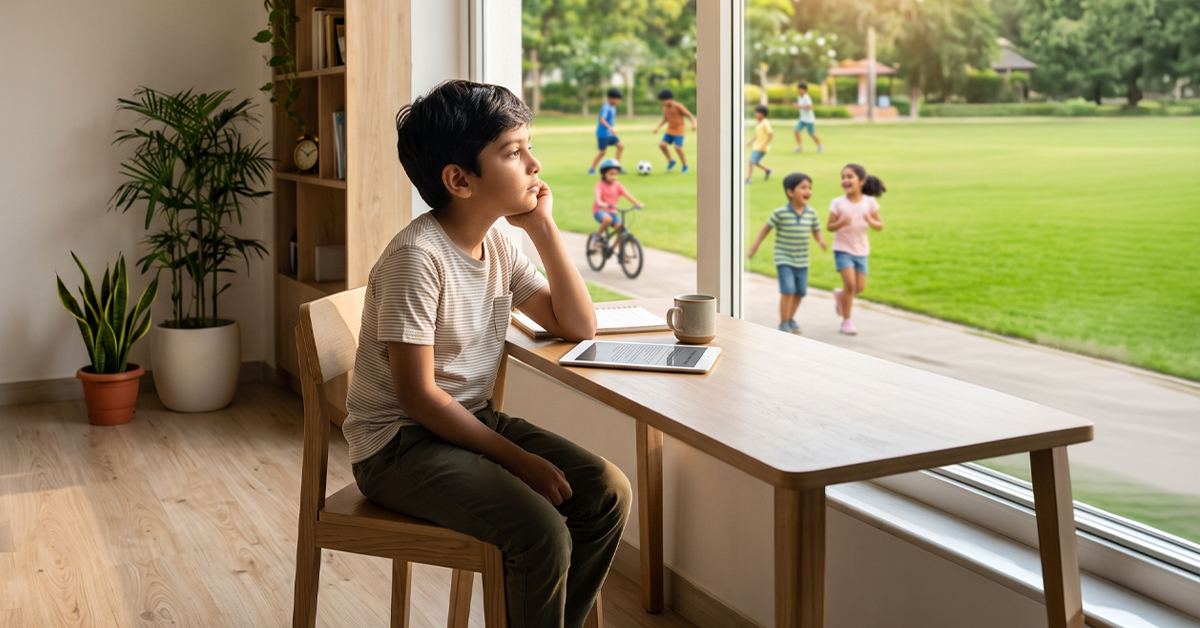
There was a time when children naturally spent more hours outside without anyone planning it. Games happened outdoors. Even simple evenings meant running around with friends before coming home. Now the day looks different. School is followed by homework, classes, and indoor activities. Free time often happens inside the house, whether it is spent on a screen or not.
That is probably why conversations around how to prevent myopia in kids have changed over the years. Reducing screen time can certainly help, but making room for outdoor play and giving the eyes a chance to focus on distant objects matters too. It is less about removing one thing and more about bringing balance back into the day.
Small Habits Usually Stay Longer
Parents sometimes feel they need one perfect solution to manage screen time. They may believe strict rules, such as banning screens during weekdays or limiting use to only one hour every evening, are the only way to create healthy habits.
While these approaches can work well for some families, they are not always practical or easy to maintain over time. Every household has different routines, responsibilities, and challenges, so what works for one family may not suit another. Instead of aiming for perfection, parents can focus on creating flexible, consistent boundaries that fit their family's lifestyle and changing needs.
At Win Vision, we find that children often respond better to simple habits that quietly become part of everyday life.
Simple habits that make a difference include:
- Taking regular breaks from screens throughout the day.
- Using digital devices in a well-lit room.
- Holding screens at a comfortable viewing distance.
- Encouraging outdoor play whenever possible.
- Scheduling regular eye check-ups to monitor children's vision.
Myopia Rarely Announces Itself
One thing about myopia is that it does not usually arrive all at once. Children adjust without even realizing it. They move closer to the television. They sit in the front row at school whenever they can. They blink, squint, or rub their eyes without thinking much about it.
At Win Vision, these small moments are often what parents describe during an eye check-up. Looking back, they realize the signs had been there for months. These can be early signs of myopia in school children, and they are easy to miss simply because they become part of everyday life. A routine eye examination can often spot changes before they begin affecting learning or confidence.
Why We At Win Vision Keep Talking About Early Eye Care
There is a reason we continue having these conversations at Win Vision. For the past eight years, we have been working to make quality eye care more accessible across Telangana and Andhra Pradesh. Today, our network includes six centres supported by more than 18 experienced experts. Along the way, we have tested over 54,246 eyes and procedures and have had the privilege of serving nearly 1.5 lakh families.
Our work has never been limited to cities alone. We continue reaching tier-2 and tier-3 towns as well as rural communities because good eye care should not depend on where someone lives. Families visit Win Vision for many different reasons, including cataract care, LASIK, cornea treatment, glaucoma care, vitreoretina and uvea services, pediatric and squint care, oculoplasty, and routine eye examinations.
Whatever brings them through our doors, the conversation often comes back to the same idea, healthy vision begins with paying attention before small problems become bigger ones.
Maybe The Bigger Question Is About Balance
It is easy to think screens have created the entire problem because they are always visible. But perhaps the real question is whether children's lives still give their eyes enough variety.
- Enough time outdoors.
- Enough breaks during long hours of reading.
- Enough regular eye check-ups.
At Win Vision, we believe these everyday choices often matter more than people expect. They also become practical myopia prevention tips because they fit naturally into family life instead of feeling like impossible rules.
Final Words
It would probably be easier if one thing could be blamed for myopia. Then the solution would be just as simple. The reality feels different. A child's eyesight is shaped by many small habits that quietly come together over time. Screens may be one part of that picture, but they are rarely the whole picture.
At Win Vision, we believe understanding that difference is where better decisions begin. When we stop searching for one culprit and start looking at a child's everyday routine as a whole, protecting healthy vision starts to feel a little more achievable, and a lot more meaningful.
FAQs
Can too much screen time cause myopia in children?
Prolonged screen time alone does not directly cause myopia, but excessive near work combined with limited outdoor activity may increase the risk of its progression.
At what age should children have their first eye examination?
Children should have regular eye examinations as recommended by their eye specialist, especially before starting school or if they show signs of vision problems.
How much outdoor time is recommended for children?
Experts generally recommend that children spend around 1–2 hours outdoors each day to support healthy eye development and overall well-being.
What are the first signs of myopia?
Common signs include squinting, sitting close to the television, holding books too close, frequent headaches, and difficulty seeing distant objects.
How often should children get their eyes checked?
Most children should have a comprehensive eye examination every one to two years, or more frequently if advised by their eye specialist.