

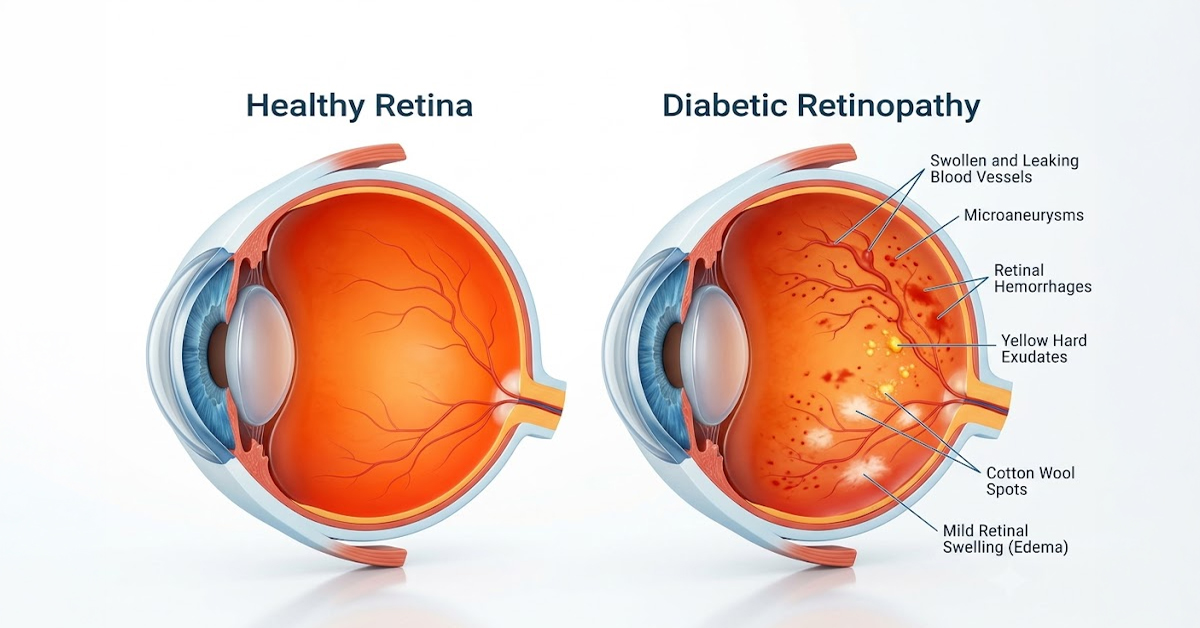
There is something about diabetes that makes it feel manageable once the medicines become part of everyday life. The routine settles in. Blood sugar gets checked. Food choices become more familiar. Appointments happen when they are due. But there is one part of the body that can quietly go unnoticed for much longer.
At Win Vision, we often meet people who are surprised to learn that diabetes can affect the eyes even before vision starts feeling different. That is probably what makes diabetic retinopathy so easy to overlook. It does not always ask for attention in the beginning.
The Eyes Can Stay Quiet For A Long Time
One of the difficult things about diabetes is that not every change is easy to feel. The eyes are a good example of that. When people think about how diabetes affects eyesight, they often imagine sudden vision loss or obvious changes. In reality, diabetic retinopathy usually develops slowly. The tiny blood vessels inside the retina can begin changing long before everyday vision feels unusual.
At Win Vision, we often encourage people not to wait for discomfort before thinking about their eye health. Sometimes the absence of symptoms is exactly why regular eye care becomes important.
Small Changes Can Mean More Than They Seem
The first signs are not always dramatic. Many people assume they are simply tired or that their glasses need changing. Some early symptoms that should not be ignored include:
- Blurred vision that comes and goes
- Difficulty reading small print
- Dark spots or floaters in your vision
- Trouble seeing clearly at night
- Vision that suddenly seems less sharp than usual
These can sometimes be diabetic retinopathy symptoms, but they are also the kind of changes that deserve an eye examination instead of guesswork. At Win Vision, we often remind families that paying attention to these small changes is not about becoming worried. It is simply about giving the eyes the attention they deserve.
Waiting For Vision Loss Can Be A Mistake
Many people believe eye check-ups become necessary only after their vision starts getting worse. At first, this seems like a reasonable assumption because changes in eyesight are often seen as the first sign of an eye problem. However, diabetic retinopathy does not always follow that pattern. In its early stages, the condition can progress quietly without causing pain or noticeable vision changes. As a result, damage to the blood vessels in the retina may continue unnoticed.
By the time blurred vision or other symptoms appear, the disease may already be advanced and require more complex treatment. This is why regular eye examinations are essential for people with diabetes, even when their vision seems perfectly normal. Early detection offers the best chance to protect long-term eyesight.
That is why diabetic eye screening has become such an important part of diabetes care. The goal is not to confirm that something has gone wrong. It is to find changes while there is still time to manage them more effectively. At Win Vision, we see regular screening as one of the simplest ways to protect vision over the long term.
Diabetes Does Not Affect Every Eye The Same Way
No two people experience diabetes the same way. Some live with it for years without major eye problems, while others notice vision changes much sooner, even when they have taken good care of their health. Every person's risk is different, making regular eye check-ups essential regardless of symptoms.
That uncertainty is probably why retinal disease in diabetes cannot be predicted simply by looking at how someone feels from day to day. At Win Vision, we believe every person with diabetes deserves individual attention because eye health depends on many factors, not just one blood sugar reading or one good month.
Who Is at Higher Risk?
Your risk may be higher if you:
- Have had diabetes for many years
- Frequently experience high blood sugar levels
- Have high blood pressure
- Have high cholesterol
- Smoke
- Skip regular eye examinations
Why We At Win Vision Keep Talking About Early Detection
There is a reason these conversations happen so often at Win Vision. For the past eight years, we have been working to make quality eye care more accessible across Telangana and Andhra Pradesh. Today, our network includes six centres supported by more than 18 experienced experts. Along the way, we have tested over 54,246 eyes and procedures and have had the privilege of serving nearly 1.5 lakh families.
Our commitment continues to reach tier-2 and tier-3 cities as well as rural communities because timely eye care should never depend on where someone lives. At Win Vision, we provide comprehensive ophthalmology services including vitreoretina and uvea care, glaucoma treatment, cataract surgery, cornea care, pediatric and squint services, LASIK procedures, oculoplasty, and many other specialised treatments.
When someone with diabetes visits Win Vision, the conversation is rarely only about today's vision. We also think about protecting the years ahead, because early care often makes a meaningful difference.
The Earlier Signs Are Often The Most Valuable
Perhaps the biggest challenge is that people wait for something obvious. A great deal of eye care is built around noticing things before they become obvious. Blurry vision that keeps returning. Floating spots that seem unusual. Difficulty seeing in dim light. Vision that changes without a clear reason. These are some of the diabetic retinopathy warning signs that should not simply be brushed aside.
At Win Vision, we believe these small moments matter. They can be the start of an important conversation about eye health rather than something to ignore. Paying attention early creates opportunities to detect problems sooner and take the right steps to protect your vision.
Final Words
Managing diabetes is usually thought of in terms of medicines, food, and regular health check-ups. Perhaps eye care deserves to sit beside those habits instead of somewhere behind them. At Win Vision, we believe healthy vision is not protected by waiting until something feels wrong. It is protected by making eye examinations a regular part of living with diabetes, even when everything seems normal.
FAQs
What is diabetic retinopathy?
Diabetic retinopathy is an eye condition caused by damage to the blood vessels in the retina due to diabetes. It can lead to vision loss if left untreated.
Can diabetic retinopathy develop without symptoms?
Yes. In its early stages, diabetic retinopathy often has no noticeable symptoms, making regular eye examinations essential.
How often should people with diabetes have an eye examination?
Most people with diabetes should have a comprehensive eye examination at least once a year, or as recommended by their eye specialist.
Can diabetic retinopathy be treated?
Yes. Early detection and timely treatment can help slow the progression of diabetic retinopathy and protect your vision.
What are the early warning signs of diabetic retinopathy?
Common signs include blurred vision, floaters, poor night vision, and sudden changes in eyesight. These symptoms should be evaluated promptly.